Introduction
Creating a workplace where employees stay motivated, productive, and engaged is one of the biggest challenges for modern organizations. Businesses invest in technology, training, and workplace culture, yet many teams still struggle with low engagement, declining motivation, and communication gaps. Employees often perform repetitive tasks every day, making it difficult to maintain enthusiasm over long periods.
One approach gaining attention is workplace gamification. Instead of changing the work itself, organizations redesign how employees experience their daily responsibilities. Small elements such as achievements, progress tracking, challenges, rewards, and recognition can make routine activities more engaging while encouraging continuous improvement.
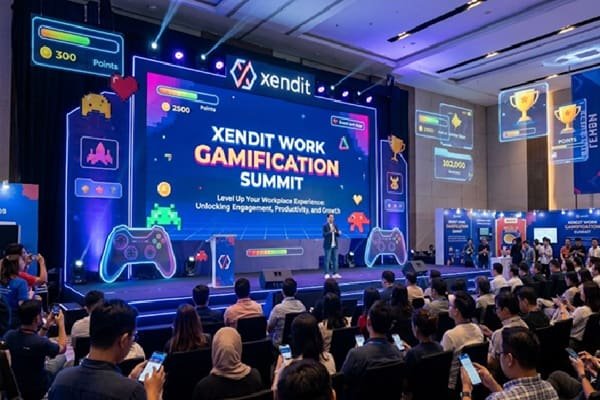
The concept behind the Xendit Work Gamification Summit focuses on exploring how gamification can improve workplace culture, employee development, collaboration, leadership, and organizational performance. Rather than treating gamification as entertainment, it presents it as a strategic business approach that helps people stay motivated while achieving meaningful goals.
This guide explains everything about the Xendit Work Gamification Summit, including workplace gamification, employee engagement strategies, business benefits, leadership practices, learning systems, and why more organizations are adopting gamified work environments.
What Is the Xendit Work Gamification Summit?
The Xendit Work Gamification Summit represents a professional discussion around applying gamification principles to modern workplaces. It focuses on how organizations can use game-inspired techniques to improve employee engagement, learning, teamwork, productivity, and long-term business performance.
Rather than making work feel like a game, the objective is to make work more rewarding and meaningful.
Progress tracking, achievement systems, learning milestones, recognition programs, and collaborative challenges encourage employees to remain engaged while contributing toward organizational goals.
The overall purpose is creating a work environment where employees feel motivated, appreciated, and continuously encouraged to improve.
Understanding Workplace Gamification
Gamification applies ideas commonly found in games to everyday business activities.
These ideas include setting clear goals, measuring progress, rewarding achievements, recognizing success, and encouraging healthy collaboration.
Employees remain focused because they can clearly see how their work contributes to larger organizational objectives.
Recognition also becomes more visible.
Instead of waiting only for annual performance reviews, employees receive ongoing feedback that encourages continuous improvement.
Gamification supports both individual growth and team collaboration when implemented thoughtfully.
Why Workplace Gamification Matters
Employee motivation directly influences organizational success.
Engaged employees often communicate more effectively, complete tasks more efficiently, and contribute valuable ideas during projects.
Organizations also experience stronger teamwork because employees understand shared objectives more clearly.
Recognition plays an important role.
People naturally appreciate knowing their efforts are noticed and valued.
Regular feedback encourages employees to remain committed while building greater confidence in their abilities.
Improved engagement often leads to better customer experiences because motivated employees typically provide higher-quality service.
The Evolution of Employee Engagement
Traditional workplace management often relied primarily on supervision and performance evaluations.
While these methods remain important, they do not always create lasting motivation.
Modern organizations increasingly recognize that employees perform better when they feel connected to meaningful goals.
Professional development, collaboration, recognition, and continuous learning have therefore become essential parts of workplace culture.
Gamification supports these priorities by making progress visible while encouraging active participation.
Technology has also made implementation easier through digital dashboards, performance tracking, learning platforms, and collaborative tools.
Core Principles Behind Workplace Gamification
Several important principles define successful workplace gamification.
Clear Goals
Employees perform better when expectations are clearly defined.
Well-structured objectives reduce confusion while helping individuals understand what success looks like.
Visible progress also increases motivation because employees can measure improvement over time.
Recognition
Recognition encourages positive behavior.
Celebrating meaningful achievements helps employees feel appreciated while reinforcing productive habits.
Recognition does not always require financial rewards.
Simple acknowledgment often creates significant positive impact.
Continuous Feedback
Waiting several months for performance reviews limits improvement opportunities.
Regular feedback allows employees to adjust, learn, and improve much more quickly.
Constructive guidance supports professional growth while strengthening communication between managers and teams.
Collaboration
Successful organizations depend on teamwork.
Gamification encourages employees to work together toward shared objectives instead of focusing only on individual performance.
Collaborative challenges strengthen communication while building stronger workplace relationships.
Learning
Continuous learning remains essential as industries evolve.
Gamified training programs encourage employees to complete educational activities while tracking their progress through milestones and achievements.
Learning becomes more engaging because employees receive immediate feedback as they develop new skills.
Benefits of Workplace Gamification
Organizations implementing thoughtful gamification strategies often experience several valuable outcomes.
Employee engagement typically improves because work becomes more interactive and rewarding.
Motivation increases when individuals receive regular recognition for meaningful contributions.
Learning programs become more effective because employees actively participate rather than simply completing required training.
Team collaboration also improves through shared objectives and cooperative challenges.
Managers gain greater visibility into employee progress while identifying opportunities for additional coaching and development.
Higher engagement frequently contributes to stronger customer satisfaction because motivated employees deliver better service.
Employee Development Through Gamification
Professional growth becomes more structured when employees can clearly see their learning progress.
Training programs become easier to follow through milestones, achievement systems, and measurable objectives.
Employees gain confidence as they complete increasingly challenging learning activities.
Skill development also becomes more consistent because progress is monitored continuously rather than only during annual reviews.
Organizations benefit by creating stronger internal talent pipelines while reducing skill gaps across departments.
Learning evolves from an occasional activity into an ongoing part of everyday work.
Leadership and Workplace Motivation
Leaders play an essential role in successful gamification initiatives.
Technology alone cannot create employee engagement.
Managers must provide encouragement, meaningful feedback, and opportunities for continuous improvement.
Successful leaders recognize achievements consistently rather than only addressing mistakes.
Open communication strengthens trust while encouraging employees to contribute ideas confidently.
Leadership also ensures gamification supports organizational values instead of creating unnecessary competition.
Balanced systems encourage cooperation while recognizing individual excellence appropriately.
Building a Positive Workplace Culture
Culture influences every aspect of organizational performance.
Employees who feel respected, supported, and recognized often contribute more actively to business success.
Gamification reinforces positive workplace behaviors by encouraging participation, learning, collaboration, and shared achievement.
Rather than focusing only on results, organizations celebrate progress throughout the journey.
This creates healthier work environments where continuous improvement becomes part of everyday culture.
Strong workplace culture also improves employee retention because people are more likely to remain with organizations where they feel valued.
Business Applications of Workplace Gamification
Workplace gamification can be applied across many different departments. Its flexibility allows organizations to improve performance in ways that match their business goals rather than following a single fixed approach.
Human resources teams often use gamification during employee onboarding. New employees can complete learning milestones, company orientation activities, and policy training through structured progress systems that make the process more engaging.
Sales departments frequently use performance dashboards, achievement levels, and team challenges to encourage healthy competition while maintaining collaboration. Recognizing consistent improvement often motivates employees more effectively than focusing only on final results.
Customer service teams may use progress tracking to improve response quality, customer satisfaction, and communication skills. Employees receive regular feedback while building confidence through measurable improvements.
Training departments also benefit from gamified learning because educational programs become more interactive. Employees complete lessons, practical exercises, and assessments while tracking their progress throughout the learning journey.
Challenges of Workplace Gamification
Although gamification offers many advantages, successful implementation requires careful planning.
One common challenge is focusing too heavily on rewards while ignoring meaningful work. Employees should remain motivated by professional growth and organizational purpose rather than collecting points alone.
Excessive competition may also reduce teamwork if recognition systems reward only individual performance.
Organizations should balance individual achievements with collaborative success to encourage healthy workplace relationships.
Another challenge involves designing fair measurement systems.
Employees performing different responsibilities require evaluation methods appropriate to their roles.
Simple score comparisons rarely reflect the complete value individuals contribute to an organization.
Regular feedback from employees helps organizations improve gamification systems while ensuring they remain motivating and inclusive.
Also Read : Tech Hacks PBLinuxGaming: Complete Guide to Linux Gaming Performance and Optimization
Best Practices for Successful Implementation
Organizations should begin with clear objectives before introducing workplace gamification.
Understanding existing workplace challenges helps identify where improvements will create the greatest impact.
Recognition should reward meaningful behaviors rather than encouraging unnecessary competition.
Learning programs should support practical skill development instead of focusing only on completion rates.
Managers should communicate openly about the purpose of gamification so employees understand how it supports personal and organizational growth.
Regular evaluation also remains important.
Collecting employee feedback helps identify successful elements while revealing opportunities for improvement.
Gamification should continue evolving alongside changing business needs.
Measuring Success
Successful workplace initiatives require measurable outcomes.
Employee engagement surveys provide valuable insights into workplace satisfaction.
Training completion rates help evaluate learning effectiveness.
Project completion times indicate whether collaboration has improved.
Customer satisfaction scores often reflect improvements in employee engagement.
Retention rates may also improve when employees feel recognized, supported, and motivated.
Productivity should be evaluated alongside employee well-being because sustainable performance depends on maintaining healthy workplace environments.
Combining multiple performance indicators provides a more complete understanding of organizational progress.
The Future of Workplace Gamification
Technology continues expanding the possibilities for employee engagement.
Artificial intelligence may eventually personalize learning experiences according to individual strengths, career goals, and performance history.
Digital dashboards could provide real-time coaching suggestions based on employee progress.
Virtual reality training environments may create immersive learning experiences that improve practical skill development.
Hybrid and remote work environments will also continue increasing demand for digital engagement strategies.
Gamification provides organizations with structured methods for maintaining motivation regardless of where employees work.
Future workplace systems will likely combine artificial intelligence, data analytics, collaboration platforms, and personalized learning into integrated employee development experiences.
Why Employee Engagement Will Continue Growing
Organizations increasingly recognize that engaged employees contribute more than completed tasks.
Motivated individuals often share ideas, solve problems creatively, support colleagues, and strengthen workplace culture.
Employee engagement therefore becomes a long-term investment rather than a short-term management strategy.
Companies that prioritize learning, recognition, communication, and collaboration often develop stronger organizational resilience.
As workplace expectations continue changing, businesses will likely invest even more heavily in employee experience and professional development.
Gamification will remain one of several valuable tools supporting these broader organizational goals.
Frequently Asked Questions
What is the Xendit Work Gamification Summit?
The Xendit Work Gamification Summit refers to discussions and ideas focused on applying workplace gamification to improve employee engagement, collaboration, learning, leadership, and organizational performance.
What is workplace gamification?
Workplace gamification uses game-inspired elements such as achievements, progress tracking, challenges, recognition, and rewards to encourage positive employee behavior and improve motivation.
Does gamification increase productivity?
When implemented thoughtfully, gamification can improve engagement, collaboration, learning participation, and employee motivation, all of which may contribute to better productivity.
Which departments benefit most from gamification?
Human resources, sales, customer service, employee training, project management, and leadership development programs commonly benefit from gamified approaches.
Can small businesses use workplace gamification?
Yes. Small organizations can implement simple recognition systems, learning milestones, team challenges, and progress tracking without requiring complex technology.
Why is recognition important?
Recognition helps employees understand that their contributions matter. Regular appreciation encourages motivation, confidence, and continued professional growth.
Final Thoughts
The Xendit Work Gamification Summit highlights the growing importance of employee engagement as a foundation for organizational success. Rather than treating work as a series of routine tasks, gamification encourages continuous learning, meaningful recognition, stronger collaboration, and measurable professional development.
Successful workplace gamification is not about turning business into a game. It is about creating environments where employees understand their goals, receive regular feedback, celebrate meaningful achievements, and remain motivated to improve.
Organizations that combine thoughtful leadership with structured engagement strategies often build stronger workplace cultures, improve employee satisfaction, and encourage long-term business growth.
As technology continues shaping the future of work, gamification will remain an important approach for organizations seeking to create productive, collaborative, and people-centered workplaces.